Connecting Dots, Igniting Assets: How Systems Leadership is Transforming Spokane’s Creative Economy
Opening Reflection: Life Without Creatives
Imagine waking up in a world without creativity. Your phone is a dull gray brick. Your clothes are identical and joyless. No music plays on your commute. The streets are lined with sterile buildings. Lunch is just fuel, not flavor. The evening brings no stories, no theater, no shared experience.
This isn’t just a less beautiful world. It is one without empathy, without connection, without meaning.
This is what happens when we treat arts and humanities as luxuries instead of necessities.
Creativity as Infrastructure: A New Approach to Economic Development
In Spokane, Washington, and Coeur d’Alene, Idaho, a different kind of economic strategy is taking root. It is one that centers culture, connection, and care.
ERC Fellow Darya Pilram is working with local partners to establish Creative Districts where appropriate and needed, not as aesthetic overlays, but as living laboratories for community-based economic development that celebrates unique culture and identity, supports small business development, and attracts and sustains creative people and ideas because these support both economic development AND neighborhood vitality.
“The idea is not to ‘add’ arts and culture,” Darya explains. “It’s to recognize that they’ve always been here generating immense impact in terms of economic and community vitality. We just haven’t been noticing.”
The ERC Model: Embedding Change Agents
Darya is one of 65 Fellows in the Economic Recovery Corps (ERC), a national fellowship program launched in 2023 through a $30 million cooperative agreement between the International Economic Development Council (IEDC) and the U.S. Economic Development Administration (EDA).
ERC Fellows are embedded full-time for 30 months in local host organizations across 42 states and two U.S. territories. Their mission is to build local capacity, implement regional strategies, and catalyze recovery and long-term resilience, particularly in rural, tribal, and distressed communities.
The program is rooted in the principles of transformative economic development, including:
- Community-centered design
- Culturally grounded strategies
- Power redistribution
- Sustainability and intergenerational impact
In its first year, ERC Fellows helped generate over $150 million in new funding. This represents a 5x return on the original federal investment, with nearly half of that coming from private sources.
Listening First: 400 Cups of Coffee
Before suggesting a single initiative, Darya sat down for over 400 cups of coffee with regional residents, creatives, and stakeholders, including artists, planners, musicians, city leaders, and entrepreneurs, to hear their stories and understand what mattered most. These conversations led to an asset map of good ideas and resources, positioning her role as someone who could connect dots and add capacity to experiment and iterate on good ideas with unlikely partners.
“I’m [always] listening for overlaps and alignments, making introductions, and coordinating ideas, resources, technical assistance and funding to launch ideas,” she explains.
One neighborhood, Hillyard, quickly emerged as having the right conditions for a Creative District: grit, community pride, and numerous people dedicated to championing projects to celebrate their unique identity and welcome folks back to an area often misunderstood by outsiders. But this effort isn’t consultant-driven or top-down, it’s grassroots, community-led, and deeply personal.
From Conflict Zones to Cultural Ecosystems
Darya’s unconventional background demonstrates how folks from all different experiences have something to contribute to economic development. Her past work in conflict zones prepared her to quickly orient to novel environments, build resilience in challenging places, and forge coalitions that bring different ideas and resources together toward common goals—essential skills when no single pot of resources can solve complex problems.
After being diagnosed with PTSD, she was given a social prescription for art (pottery), and eventually led to an apprenticeship in Japan studying kintsugi, the art of repairing broken pottery with gold. During her apprenticeship, she was surprised by how engaged artisans were in social matters because of their dependence on natural materials to sustain their ancient art forms. This highlighted how creatives have unique ways of approaching complex issues and making them accessible.
“Kintsugi is a celebration of scars,” she says. “The cracks become part of the story.”
That philosophy now guides her economic development work. It’s not about wiping the slate clean. It’s about honoring what exists and making it stronger.
Leveraging What We Have: Asset-Based Community and Economic Development
In Hillyard, Darya worked with residents to map assets instead of deficits. “What are we proud of? What can we build on?” That reframing opened the door to a Creative District program with a clear process to galvanize the community around common goals while creating supportive spaces to try new ideas with existing resources.
“It’s a living laboratory for testing creative placemaking that celebrates identity and culture, activating vacant spaces, attracting foot traffic to small businesses, and supporting community projects with resources we already have,” Darya explains.
In August 2025, Hillyard became Spokane’s first official Creative District, while the Garland District is also planning certification. They’re building relationships across districts to learn from each other and offer complementary services and spaces for the broader creative community.
“This is the long game,” she says. “It’s not just about one district. It’s about changing how we think about growth and who it’s for.” Darya adds,”Creative Districts are a Trojan horse…They give us an entry point to build trust, test ideas, and show what’s possible when people work together.”
Building Creative Community: Beyond Networking
Darya’s work extends beyond place-making to building a creative ecosystem. She co-founded Spokane’s first CreativeMornings chapter as a space for creative networks to gather monthly, learn together, and exchange ideas across silos.
“We have numerous networking opportunities but limited chances for creatives to simply be in community with each other,” she explains.
This approach—integrating creatives where they can make complex topics accessible and galvanize change—extends regionally. In Coeur d’Alene, her team recently secured a $350,000 federal Thriving Communities grant for the Living Lake Project, which matches artists, environmental scientists, and Coeur d’Alene Tribe knowledge keepers to steward public engagement around protecting and regenerating lake health.
She’s also showcasing how creatives across sectors produce real economic impact and discussing how to better align regional planning to account for non-traditional workers who are making significant contributions in music, fashion, fine art, culinary, and film.
“The goal is to elevate people’s appreciation for the contributions the creative economy is already making, so they’re inspired to protect it, grow it, and sustain it,” Darya notes.
Lessons in Transformative Practice
Darya’s work offers concrete insights for economic developers seeking to adopt a more inclusive, regenerative approach:
- Orient to local culture and landscape. Identify where best to fit in rather than coming in with big ideas
- Start with an asset map. Bring visibility, pride, and momentum to what communities have and what they could do rather than focusing on what’s missing
- Focus on points of intersection. Connecting dots rather than adding new ideas allows systems integrators to become the best capacity builders.
- Integrate creative thinkers. Creatives add valuable and diverse perspectives to complex plans and can make traditional and new economic development ideas more accessible, interesting, and engaging.
Her project shows how transformative economic development asks different questions: What brings people joy? What heals? What helps us feel at home?
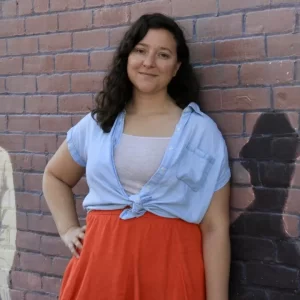
Closing Reflection: By Darya Pilram
The creative economy isn’t a side hustle. It is the soul of our communities. When we diminish support for creative work, we don’t just lose beautiful things. We lose jobs, local identity, innovation, and connection. A tech company isn’t just code. It is design. A hospital isn’t just treatment. It is healing spaces. A restaurant isn’t just food. It is storytelling.
Cuts to creative investments ripple across the economy.
“When we invest in creativity,” Darya reminds us, “we invest in resilience.”