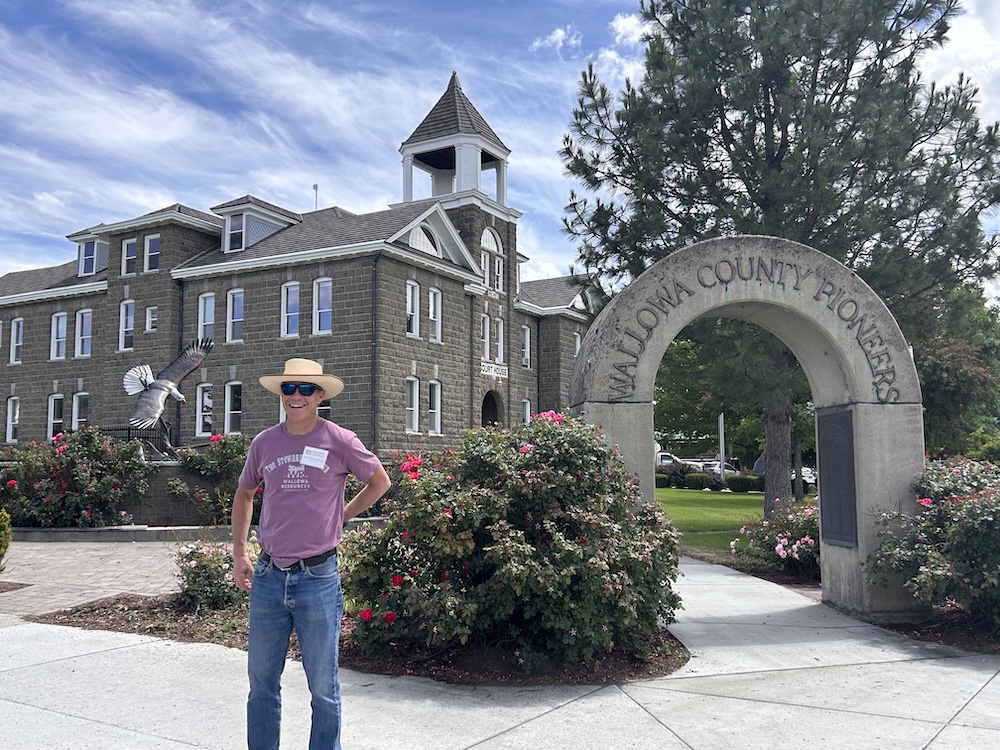
Doing It Differently: How Wallowa Resources Is Redefining Rural Resilience
Across the country, economic development strategies are evolving. Professionals are challenging the limits of traditional models and embracing long-term, community-centered approaches that prioritize equity, sustainability, and local resilience. That evolution is the foundation of the Economic Recovery Corps (ERC), and few places better illustrate this shift than Wallowa County, Oregon.
In the remote northeast corner of the state, Wallowa County faces the same pressures bearing down on rural communities nationwide: shrinking federal investment, disproportionately low capital and philanthropic investment compared to urban centers, climate disruption, rising housing costs, supply chain challenges, megafires, aging infrastructure, and the lingering impacts of boom-and-bust economies. The collapse of the county’s once-dominant timber industry was the defining moment. Between 1997 and 2004, all three local sawmills closed due to sudden changes in national forest management. Nearly 30% of the county’s workforce lost their jobs, and schools, health care, and the broader community suffered. Instead of waiting for those industries to return, recruiting a call center, or turning entirely to tourism, the community chose a path rooted in place that invests in its two most important assets: its land and its people.
 Origins of a Stewardship Economy
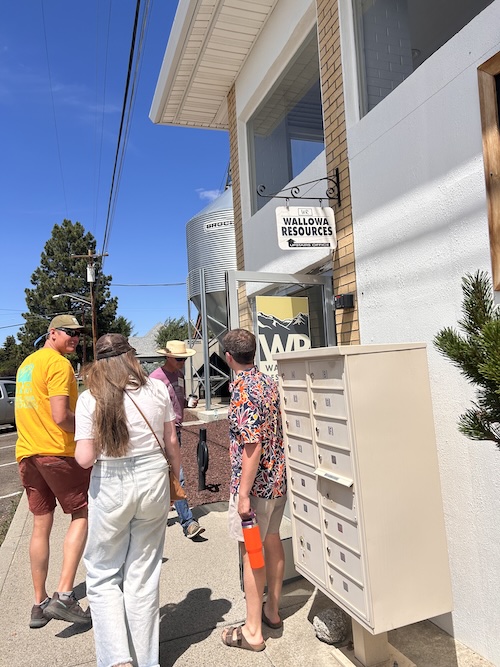
At the heart of this reinvention is Wallowa Resources, a community-based nonprofit founded in 1996. Its leader, Nils Christoffersen, brought lessons from other rural communities to local challenges. Before coming to Oregon, Nils spent six years working with communities in Zimbabwe, supporting place-based, community-led conservation and natural resource management initiatives. Those experiences showed how linking ecological restoration to livelihoods could produce healthier landscapes and more resilient communities.
As he later recalled:
“We couldn’t wait for the old timber economy to come back, and we couldn’t pin all our hopes on tourism. Stewardship offered a third way. Work that honored the land, created livelihoods, put people back to work, and helped heal the divisions in our community.”
This “stewardship economy” became Wallowa Resources’ anchor strategy. The model is values-driven yet pragmatic, treating people and land not as problems to solve or commodities to extract, but as interdependent assets. As Christoffersen puts it:
“The people who live here know that their future depends on the land, and the land’s future depends on them. That mutual responsibility is what makes a stewardship economy possible.”
“A stewardship economy benefits rural development as it places the people and the land as the most valuable assets,” Christoffersen added. “Sustaining and improving the full suite of ecosystem services that landscapes provide will generate high-quality products, build soil health, sequester carbon, improve water and wildlife habitat, and much more.”
A Stewardship Economy in Action
In practice, Wallowa Resources has spent nearly three decades weaving land and water stewardship, education and workforce training, and economic opportunity into a single, integrated strategy:
- Ecological stewardship as an economic engine. Working with a diverse coalition of partners across a 10-million-acre project area of private, tribal, and public forested landscapes, the Northern Blues Restoration Partnership demonstrates how forest and watershed restoration can create durable jobs while reducing wildfire risk and improving wildlife habitat. Wallowa Resources’ monitoring team coordinates multi-party ecological, social, and “first food” monitoring to share lessons learned and inform adaptive management.
- Renewable ingenuity. Local businesses, ranchers, agricultural producers, and community leaders have led the way on a ten-year community energy resiliency plan featuring micro-hydro, solar, and biomass projects. A biomass boiler at the local K–12 school now saves over $120,000 annually while displacing 40,000 gallons of heating oil. Micro-hydro projects use existing infrastructure such as irrigation or municipal water systems, or small, steep streams with no fish. One project generates 134 megawatts of clean energy and offsets 85% of the power needed for community residences and businesses.
- Housing solutions from the ground up. An influx of absentee homeowners, retirees, short-term vacation rentals, and skyrocketing home values has created a housing crisis for the county’s workforce. Wallowa Resources is working to preserve and expand housing supply for middle-class families. One recent success was the preservation of the only remaining workforce apartment building in Enterprise, which had been at risk of conversion into another short-term rental.
- Investing in the next generation. Place-based youth and young adult outdoor education programs, outdoor expeditions, workforce training, and natural resource workforce pipelines are cultivating the next generation of land stewards, equipping them with skills and a lasting commitment to the landscapes and people of Northeast Oregon.
- Revitalizing aging infrastructure and community hubs. The old hospital, a 56,000-square-foot building once slated for demolition, has been transformed into a vibrant community center supporting rural economic development, environmental stewardship, youth services, and education. The building offers low-cost rental space for local organizations, two public conference rooms, a community kitchen, a courtyard, and an intern wing that houses young professionals each summer. Recent upgrades to meeting spaces, communications systems, and energy efficiency continue to make the center a vital, welcoming resource.
A Microcosm of a National Shift
Wallowa’s story captures themes that resonate across ERC’s national network of Fellows and communities:
- Community-driven design, where locals set the vision.
- Grounding solutions in place and culture.
- Emphasizing systemic change, not one-off fixes.
- Redefining success around stewardship, stability, and belonging rather than GDP or job counts.
As one ERC Fellow observed:
“Economic development isn’t just about jobs, it’s about trust, belonging, and building the conditions for people to thrive on their own terms.”
Wallowa has been proving that point for decades.
Looking Ahead: A Moment to Celebrate and Scale
As Wallowa Resources nears its 30th anniversary in 2026, it plans more than a celebration. Its annual Barn Dance will double as a convening for funders, universities, and rural practitioners. New storytelling initiatives and toolkits will elevate lessons nationwide, showing how rural communities can define their own resilience.
Wallowa County may be six hours from the nearest city, but its solutions radiate outward. At a time when many rural places feel left behind, Wallowa shows that the most powerful answers are often already in our own communities—if we choose to see stewardship not as sacrifice, but as strategy.