
Beyond Recovery: What the Pacific Islands Are Teaching the Field About the Future of Economic Development
By Nicole Manapol and Katelynn Thijs
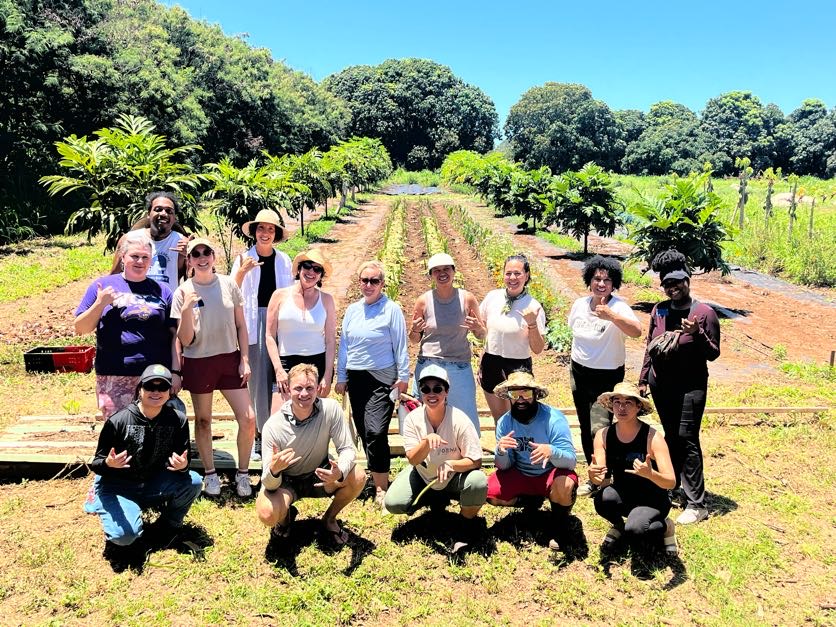
In April, a group of Economic Recovery Corps (ERC) Fellows traveled across Hawaiʻi for a peer exchange focused on disaster recovery, resilience, and community-based economic development. The exchange originally intended to conclude in the Commonwealth of the Northern Mariana Islands (CNMI). The itinerary was meant to connect practitioners working in places shaped by disaster, isolation, and economic transition — Oʻahu, Hawaiʻi Island, and CNMI.
But before the Fellows could reach Saipan, Typhoon Sinlaku forced the cancellation of the final leg of the trip. The storm, one of the strongest to impact the region since Typhoon Yutu in 2018, became a reminder that for many island communities, disaster recovery is not a one-time event. It is an ongoing reality shaping everyday life, infrastructure, and economic stability.
The irony was hard to ignore. The same disaster conditions that first drew IEDC and ERC into these communities had resurfaced — again.
Nearly a decade after the Kīlauea eruption reshaped Hawaiʻi Island and Typhoon Yutu devastated CNMI, these communities are still navigating long recovery timelines. On Oahu, the impacts after COVID-19 exposed longstanding structural inequities. And just 2.5 years after Maui’s wildfires captured national attention, these communities are still balancing recovery with preparation for what comes next.
That reality became the defining lesson of the exchange.
Disasters do not end when media attention fades. Recovery is not linear. And increasingly, economic development practitioners are being asked to operate in places where disruption is no longer episodic — it’s continuous. Across Hawaiʻi, Fellows encountered communities that are not simply rebuilding infrastructure but rethinking the very foundations of economic development: what economies are for, who they serve, and how resilience gets built in places where land, culture, identity, and survival are inseparable.
The exchange highlighted something increasingly important for the broader field: some of the most sophisticated economic development thinking in the country is emerging from communities that are often overlooked in national conversations. Much of this work is rooted in Indigenous knowledge, community stewardship, and systems of care that long predate modern economic development frameworks.
Recovery as a Permanent Condition
The trip began on Oʻahu just weeks after severe Kona Low storms flooded portions of the North Shore, leaving farms, roads, homes, and businesses underwater. ERC Fellows arrived not for a conference room exercise, but to work alongside local partners in the middle of active recovery.
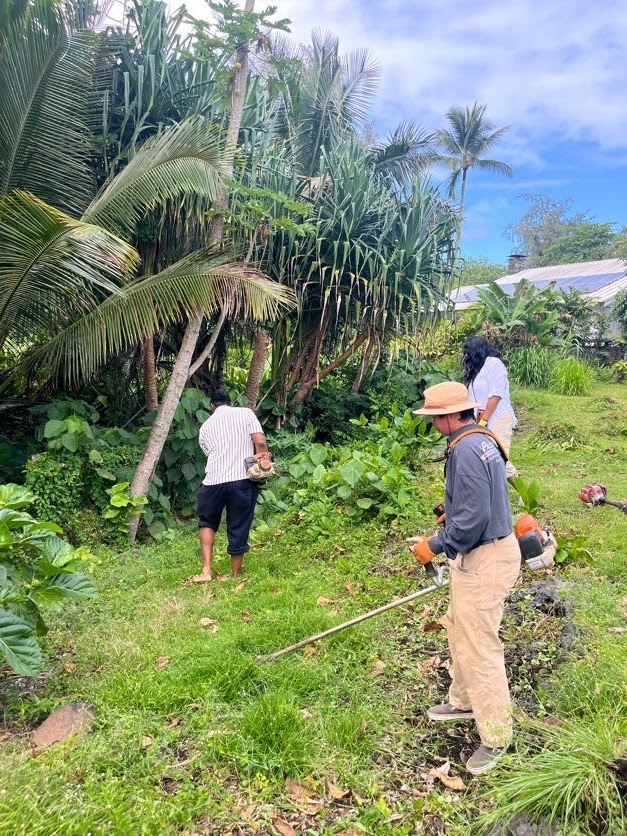
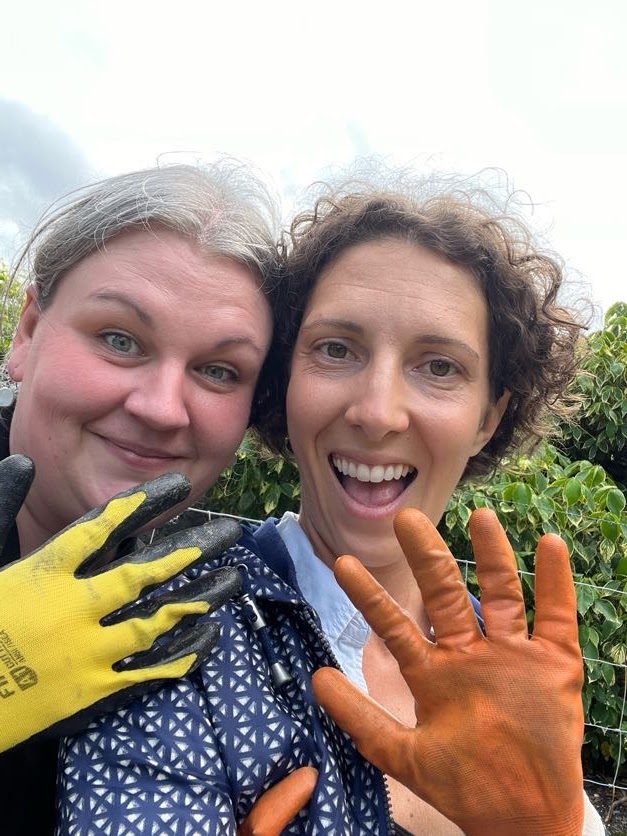
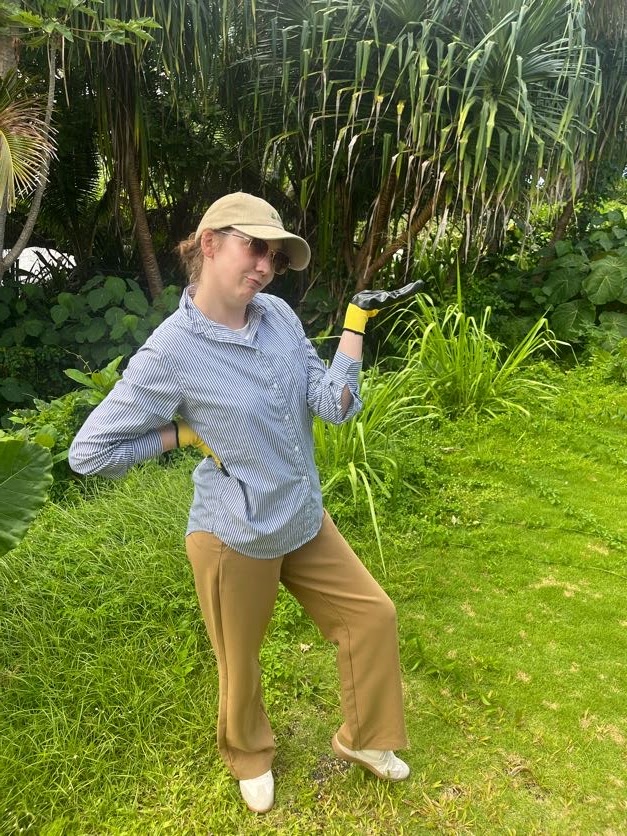
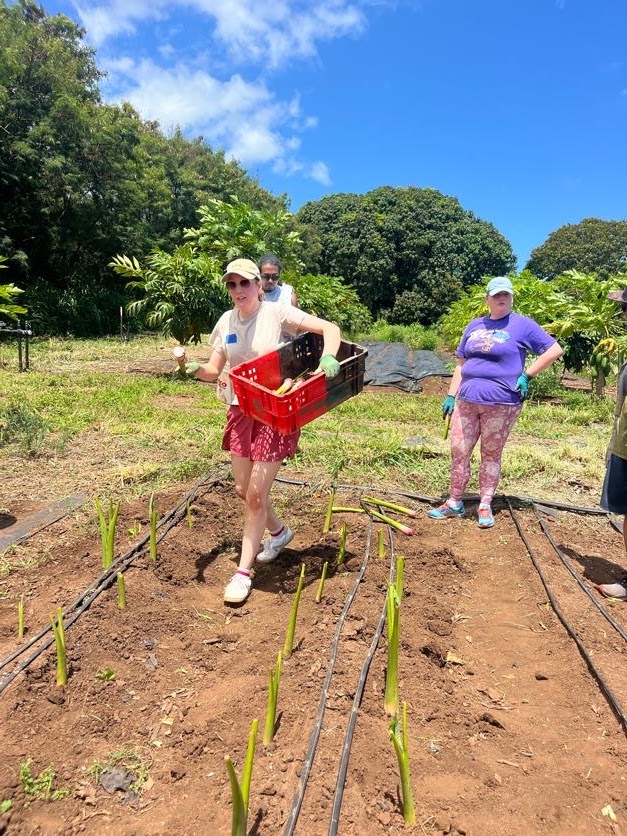
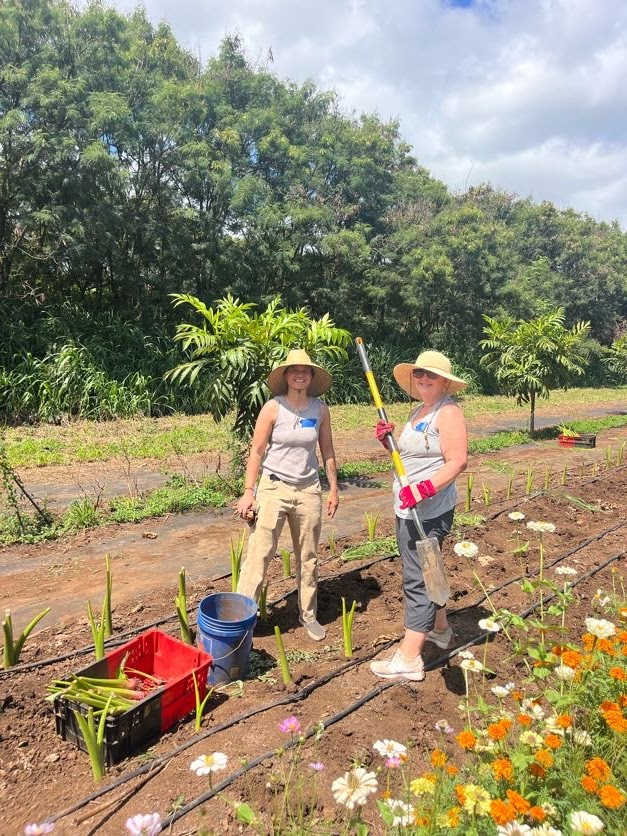
At Ki‘iki‘i Farm Provisions in Waialua, Fellows harvested crops, sanitized produce, removed flood-damaged materials, and replanted fields following USDA post-flood guidance. What started as a volunteer workday became something harder to categorize — a ground-level lesson in how environmental disruption moves through every layer of community life at once.
Floodwaters do more than destroy crops; They interrupt supply chains, threaten small businesses, destabilize household income, strain food systems, and challenge long-term community sustainability. In island communities — where food, goods, fuel, and materials often arrive by ship or plane — those vulnerabilities compound quickly. Practitioners who arrived thinking about agriculture left thinking about economic infrastructure.
That lesson carried through the rest of the Oʻahu exchange. During a visit to the Wahiāwā Value Added Product Development Center — a shared food manufacturing and processing facility — fellows saw how economic infrastructure can quickly become disaster resilience during a disaster.
During the Kona Low, the center partnered with local nonprofits to prepare and distribute meals to flood-affected residents across the region. It was not designed as an emergency response asset. But because it existed, the community could mount a response that would otherwise not have been possible.
The exchange also highlighted the growing complexity of economic development work in disaster-affected communities. While Fellows were on Oʻahu, the Office of Economic Revitalization (OER), the city’s relatively new economic development office, was simultaneously coordinating flood recovery efforts while fighting for its own municipal funding and continued existence. Staff were physically in the field reaching farmers and businesses directly, rapidly organizing a relief grant program, and ensuring that language was never a barrier to getting help.
The tension was striking. At the precise moment local practitioners were doing some of the most complex, multilayered work of their careers; the institutional infrastructure supporting that work remained politically precarious. It reflected a dynamic increasingly familiar across the profession: government often expects economic development organizations to solve systemic challenges while chronically underinvesting in the capacity required to do so.
The “Invisible Infrastructure” of Recovery
Much of the work Fellows observed in Hawaiʻi would never appear in a traditional economic development scorecard. There are no ribbon cuttings for multilingual emergency alerts. No press releases for community navigators helping a farmer understand their recovery assistance options.
In testimony submitted to the Honolulu City Council during the exchange, IEDC President and CEO Nathan Ohle described this as the “invisible infrastructure” of economic development — the coordination, trust-building, systems alignment, and relationship management that allow communities to function effectively during disruption. Without it, even well-funded recovery initiatives can become fragmented, duplicative, or inaccessible to the people they are meant to serve.
This became especially clear in conversations about recovery timelines. Again and again, local leaders emphasized that the work does not stop when federal declarations expire, or news coverage disappears. The emotional, financial, and social impacts linger for years — sometimes decades. Communities continue navigating displacement, infrastructure instability, mental health strain, insurance barriers, and economic uncertainty long after outside attention fades.
On Maui, Fellows and local leaders heard similar reflections during the National Association of Counties (NACo) Western Interstate Region Conference (May 5-8), where county officials discussed rebuilding nearly three years after the Lahaina wildfires. Recovery teams were direct about what long-term resilience actually requires: not just physical reconstruction, but the patient, often invisible work of rebuilding trust, relationships, and community capacity over time.
That is where economic development increasingly intersects with stewardship — not simply growth, not simply recovery, but a sustained commitment to the systems and relationships that allow communities to endure.
Hawaiʻi Island and the Question of What Economic Development Is For
If Oʻahu highlighted the operational realities of disaster recovery, Hawaiʻi Island pushed Fellows into deeper reflection about the philosophical foundations of the field itself.
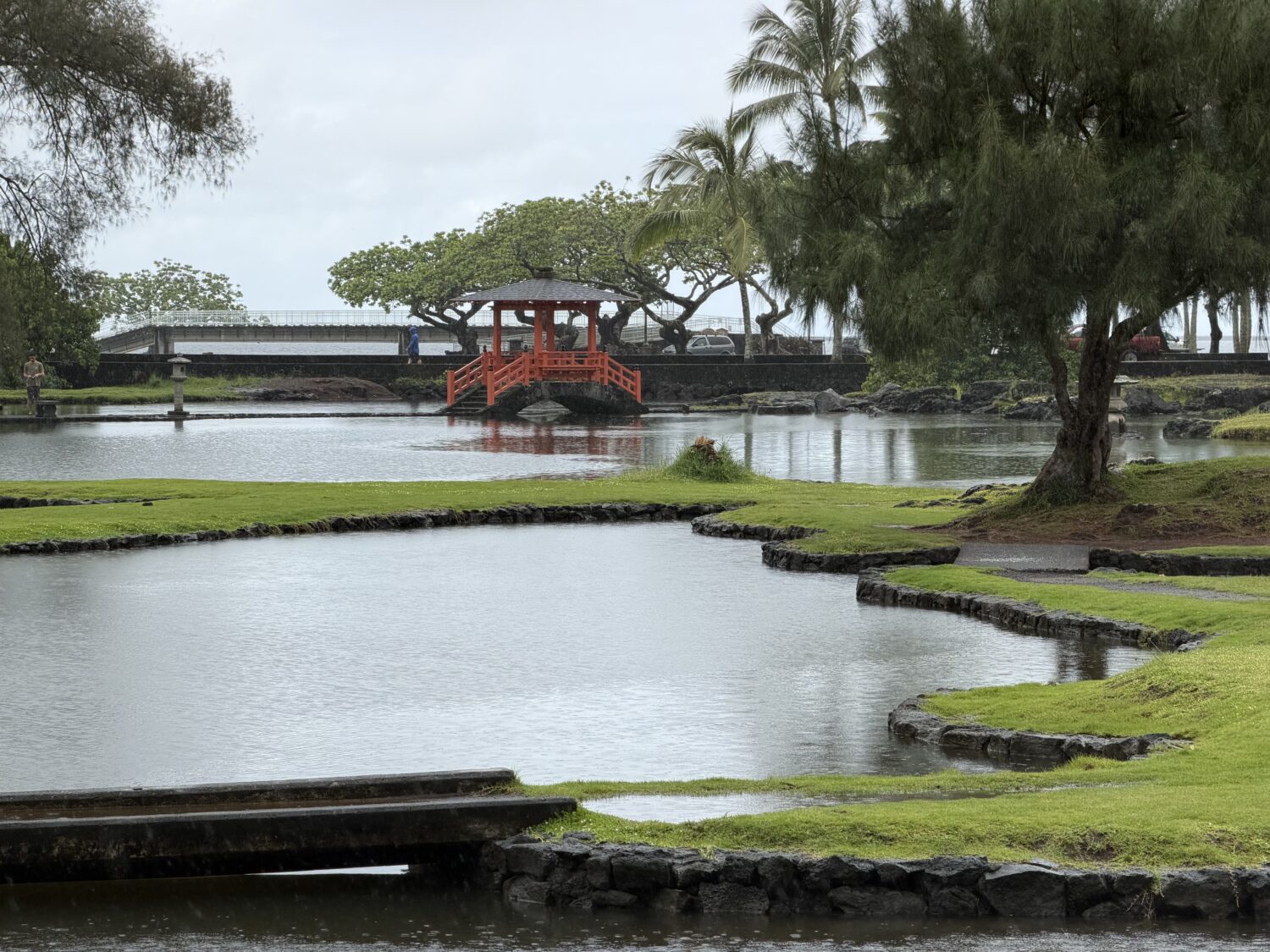
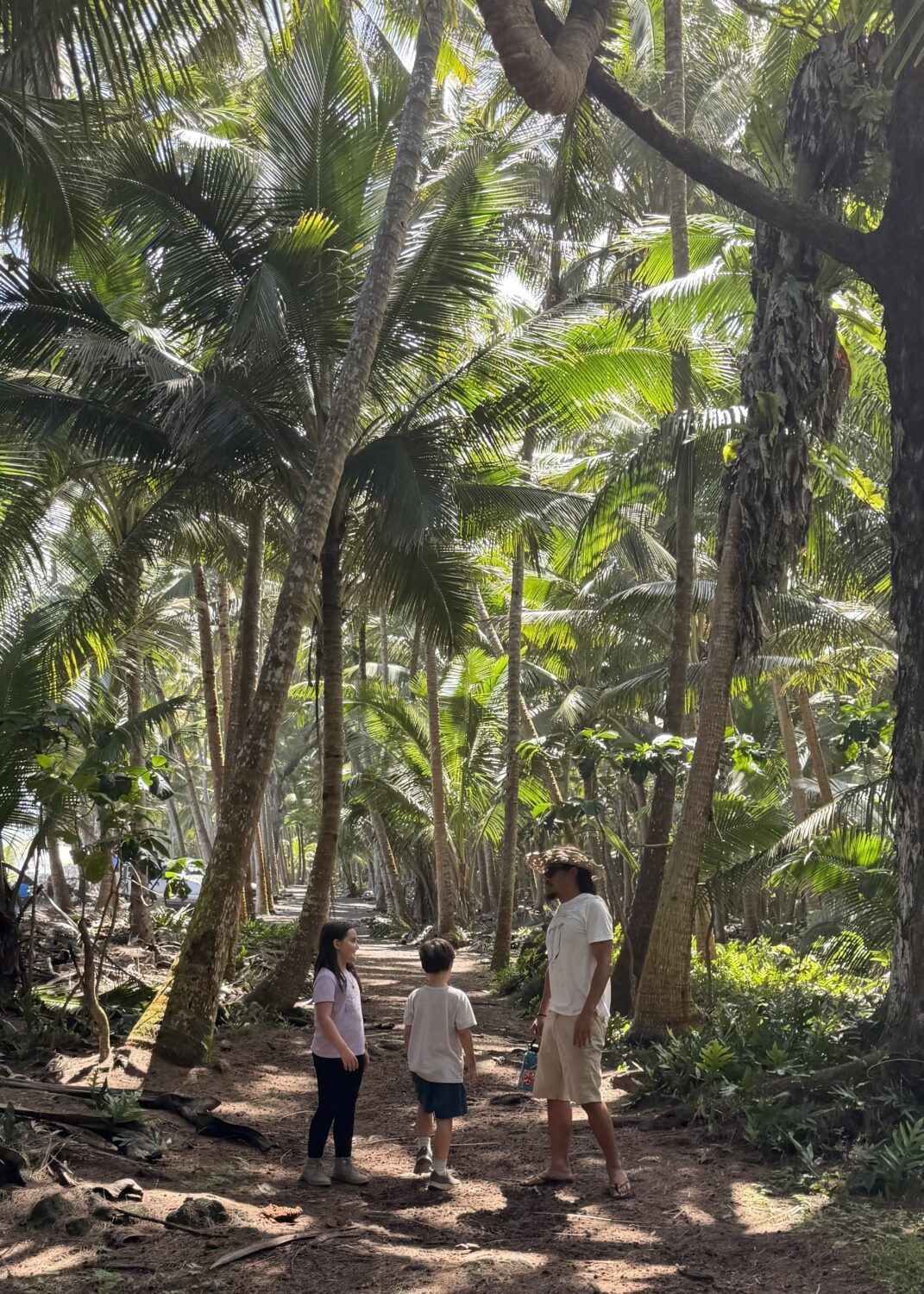
Fellows traveled through Hilo and Lower Puna with ERC Fellow Mina Viritua, whose work has centered on long-term resilience following the 2018 Kīlauea eruption. The eruption fundamentally reshaped the region — destroying more than 700 homes, erasing entire neighborhoods in Leilani Estates and Kapoho, displacing roughly 3,000 residents, and altering coastlines, infrastructure, and local economies in places where community and connection to land are deeply intertwined. Nearly a decade later, many communities are still rebuilding. Yet what emerged from the field visits was not primarily a story about disaster. It was a story about identity.
From the University of Hawaiʻi at Hilo’s College of Hawaiian Language to community organizations rebuilding fisheries, cultural markets, and cooperative enterprises, participants encountered a fundamentally different approach to economic development. One rooted not in extraction or perpetual growth, but in relationship to land, culture, ancestry, language, and community. Local leaders returned to a consistent theme – there is no separation between who people are and the economies they build.
Hawaiʻi’s history, particularly the overthrow of the Hawaiian Kingdom and the long imposition of outside economic systems, continues shaping present-day realities around land ownership, tourism, food systems, and sovereignty. For many Fellows, understanding that history was not context for the work. It was the work.
Modern conversations about regenerative economic development, sustainability, and resilience are often framed as new innovations. Many Hawaiian practitioners offered a correction: these are not new ideas. They are longstanding cultural practices, approached with rigor and responsibility across generations. The exchange surfaced a different way of thinking about development — building from strengths rather than deficits, approaching communities through invitation rather than extraction, understanding resilience as relational rather than transactional.
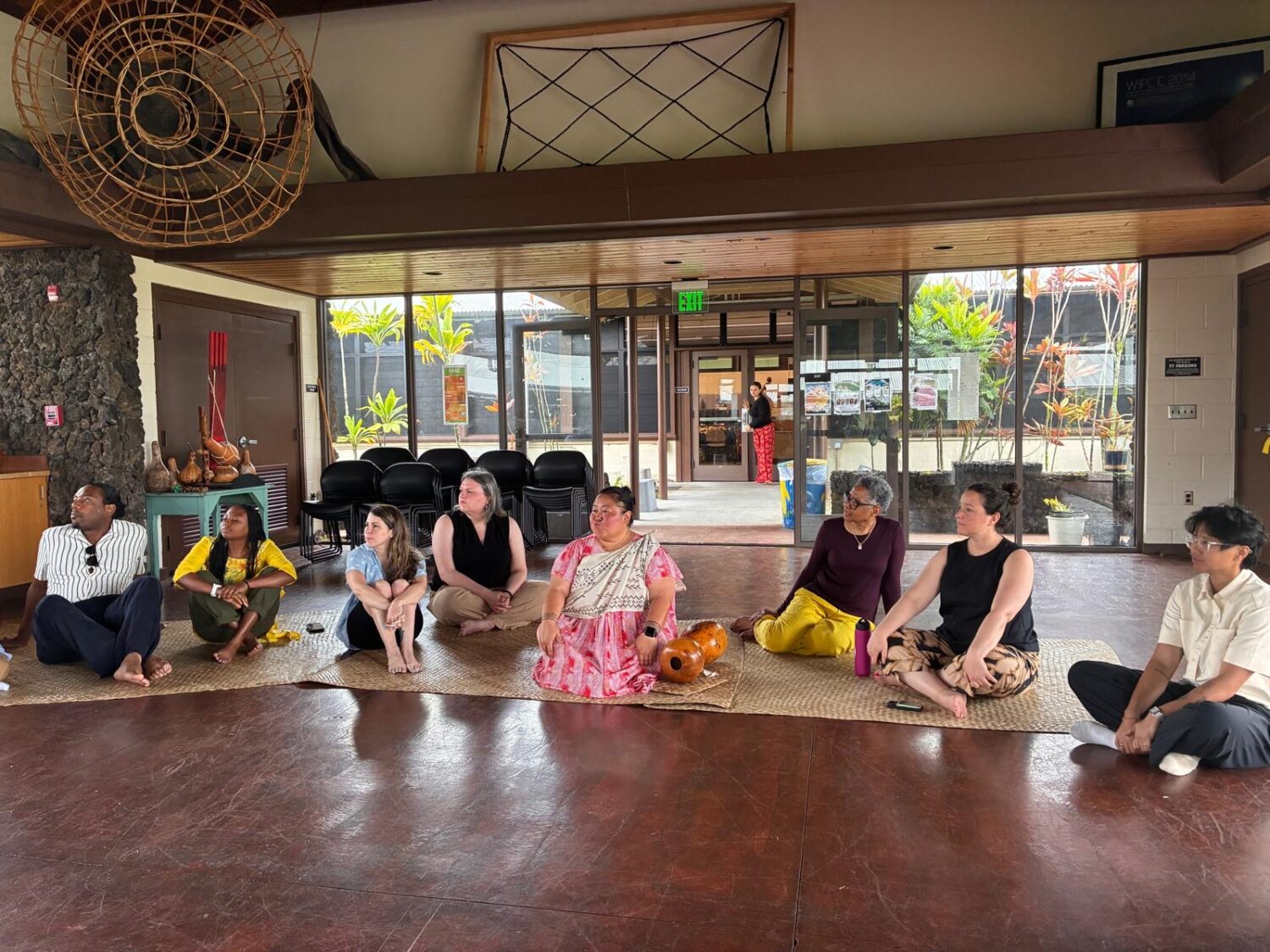
One practice shared during the exchange left a particular impression amongst the group. Before entering a community space, visitors formally announce who they are, why they have come, and request permission to enter. There is a reciprocal exchange before an invitation is granted. For Fellows, the symbolism was immediate. Economic development too often arrives with solutions, frameworks, and assumptions already formed. Hawaiʻi’s approach offered a different model: one grounded in humility, listening, and shared accountability to place and people.
Community-Led Futures
Some of the clearest expressions of this philosophy were visible in the work ERC Fellow Mina Viritua has helped advance in Lower Puna. Through ERC, Mina has supported initiatives including the Cultural Practitioners Market and the Pohoiki Fish Auction and Icehouse Cooperative — projects designed not only to generate economic activity, but to strengthen local ownership, cultural continuity, and food sovereignty.
By conventional economic development standards, these are relatively small-scale efforts. They are not megaprojects or headline-grabbing recruitment deals. But they represent something increasingly important: community-controlled economic infrastructure.
The Pohoiki cooperative, for example, aims to restore fisheries infrastructure lost during the eruption while creating locally governed systems that keep value circulating within the community. The Cultural Practitioners Market is helping artisans and cultural practitioners transition from short-term grant dependency toward sustainable revenue generation grounded in cultural tourism and local enterprise. In both cases, the goal is not simply economic activity — it is economic agency.
What made this especially striking during the exchange was seeing how much of this work is being carried out not by large institutions, but by community members themselves, often working outside formal economic development structures and driven by a deep sense of responsibility to place.
In Hilo, Fellows met with Hui Hoʻoleimaluō, a nonprofit formed by a group of young families who came together to collectively purchase an ancestral waterfront home rather than allow it to be converted into a vacation rental by outside buyers. They are now restoring the site’s traditional aquaculture systems while building local livelihoods connected to the land and water.
Elsewhere in Lower Puna, families whose fishing operations were disrupted by the eruption — cut off from boat ramp access and traditional ways of bringing catch to market — have begun pursuing new models rooted in land stewardship, cultural practice, and sustainable tourism as pathways forward.
Though each effort looks different, they are connected by the same underlying principle: resilience grows when communities maintain ownership over the systems that sustain them. Taken together, these projects raise important questions for the broader field. What if resilience is not a secondary benefit of economic development, but a core outcome? What if sovereignty matters as much as growth? What if cultural continuity is itself a form of economic infrastructure?
In Hawaiʻi, these are not abstract or rhetorical questions. They are design principles.
And increasingly, they are relevant far beyond the islands. Across the country, communities are grappling with environmental disruption, housing instability, declining trust in institutions, and economic systems that often leave residents disconnected from the places they live. Hawaiʻi’s experience suggests that resilience may depend less on importing entirely new models and more on reconnecting economic systems to local identity, stewardship, and shared responsibility.
What the Pacific Is Teaching the Field
The final stop — CNMI — never happened. Typhoon Sinlaku made sure of that. But in many ways, the cancellation became part of the lesson.
The Pacific Islands are living at the front edge of pressures reshaping economic development globally: climate disruption, fragile supply chains, tourism dependence, rising costs, housing strain, food insecurity, constrained federal capacity. They are also places with long histories of adaptation, collective stewardship, and resilience built from necessity rather than strategy. That combination makes them important teachers for the broader field — not peripheral examples, but central sources of innovation.
Too often, island communities and Indigenous-led approaches are treated as niche cases, interesting but not quite applicable to “mainstream” practice. The Hawaiʻi exchange challenged that assumption directly. These communities are developing sophisticated, systems-oriented approaches to resilience that many mainland communities are only beginning to confront. The question is whether practitioners are paying attention.
Fellows left with practical lessons around food systems, disaster coordination, community engagement, and cross-sector recovery work. But they also left with harder questions about what economic development is ultimately meant to accomplish — not simply how communities grow, but how they endure. How they remain connected to place. How they preserve identity under pressure. How they build systems capable not only of surviving disruption, but of sustaining collective life long after the cameras leave.
Economic development practitioners often speak about resilience as a framework or strategic priority. In Hawaiʻi, Fellows encountered resilience as something more grounded than that — something practiced daily, carried through food, language, land, relationships, and a sense of responsibility to community that predates any planning document. That may be the most important lesson the Pacific has to offer the field right now. And it is worth taking seriously.