For decades, economic development has often been measured by access — access to funding, programs, or formal designations. But across communities, a different reality is emerging:
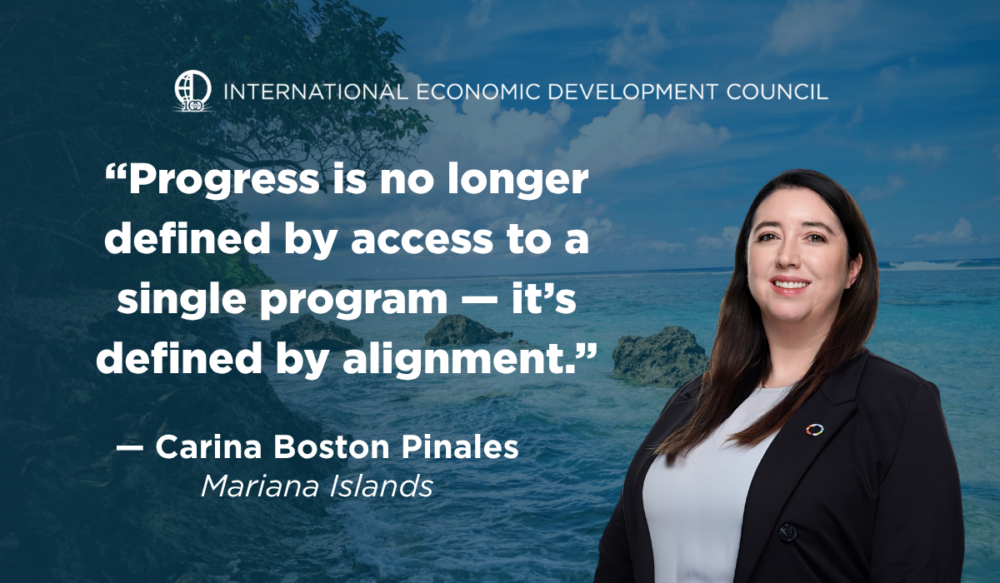
Progress is no longer defined by access to a single program. It’s defined by alignment.
A clear example comes from the work of Economic Recovery Corps Fellow Carina Boston Pinales, whose work demonstrates how progress can take shape in ways that are not always tied to large-scale initiatives or formal programs.
👉View Carina’s Project here: https://economicrecoverycorps.org/fellow-information/carina-boston-pinales/
When the Barrier Isn’t Resources — It’s Translation
In Carina’s host community, the challenge wasn’t a lack of ideas, assets, or opportunity. It was something less visible, but more limiting:
- Limited staff capacity
- Coordination challenges
- Difficulty translating local knowledge into formats recognized by federal systems
In other words, the gap wasn’t what the community had. It was how that value was communicated, understood, and aligned with external systems.
Small Actions, Big Shifts
Rather than launching a single large initiative, Carina focused on a series of small, intentional actions designed to build confidence and capability through real opportunities:
- Creating simple tools to clarify processes and roles
- Developing evaluation frameworks to guide decision-making
- Preparing local businesses to participate in broader markets
- Coaching leaders on how to communicate their value to external partners
Individually, these actions were modest. Together, they created something much larger: alignment.
Over time, these tools became self-sustaining, with community members independently requesting, using, and refining them.
What This Means for the Field
Carina’s work challenges a long-standing assumption in economic development — that progress requires a large program, designation, or influx of capital.
Instead, it highlights a different truth:
- Clarity builds confidence
- Confidence builds participation
- Participation builds momentum
And none of that requires a new program.
It requires alignment — between people, systems, and opportunities.
Looking Forward
As the field reflects on 100 years of practice, this shift is critical.
The next era of economic development won’t be defined by how many programs a community can access. It will be defined by how effectively communities can:
- Align their assets with opportunity
- Translate local value into broader systems
- Build capacity that sustains progress over time
Because in the end, programs can open doors. But alignment is what allows communities to walk through them.
As we share this, our thoughts are with those in the Mariana Islands following a recent typhoon and earthquakes that impacted the region for more than 60 hours. The prolonged nature of these events has disrupted daily life and will require both immediate and sustained recovery efforts. Those working in disaster response, recovery or resource coordination who are able to assist are encouraged to reach out directly to Carina. Those who would like to contribute can do so here: https://tinyurl.com/sinlaku.